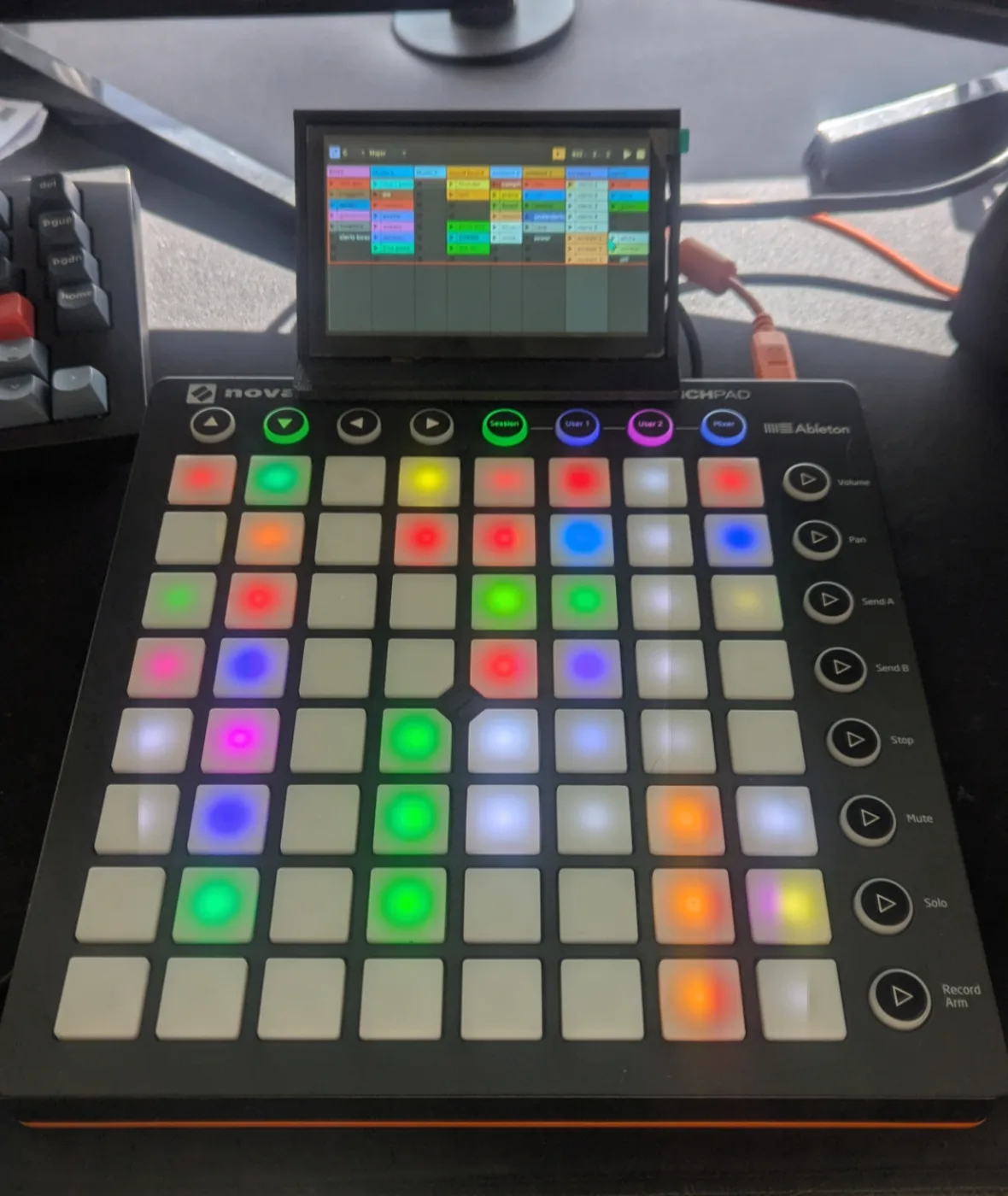
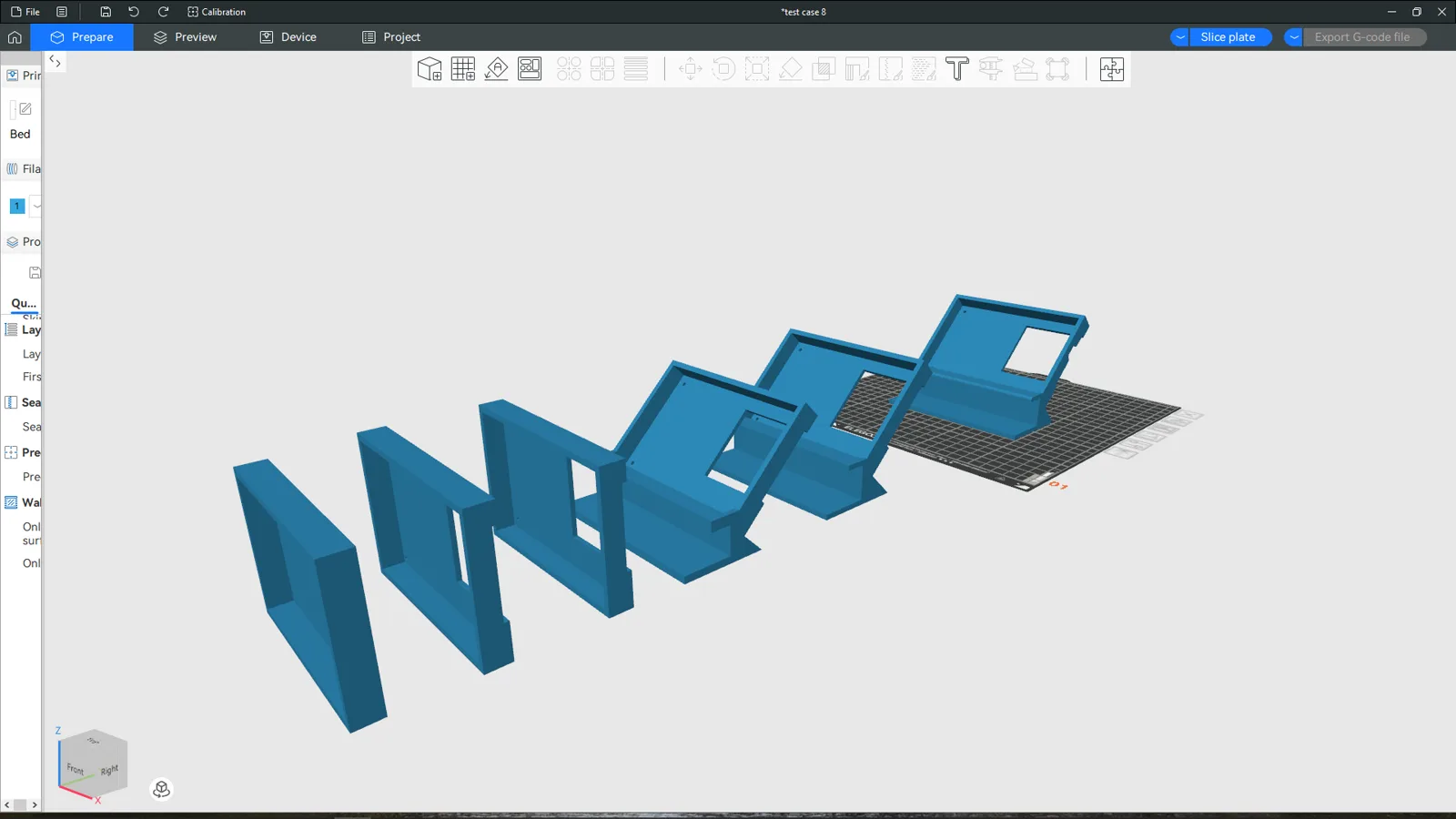
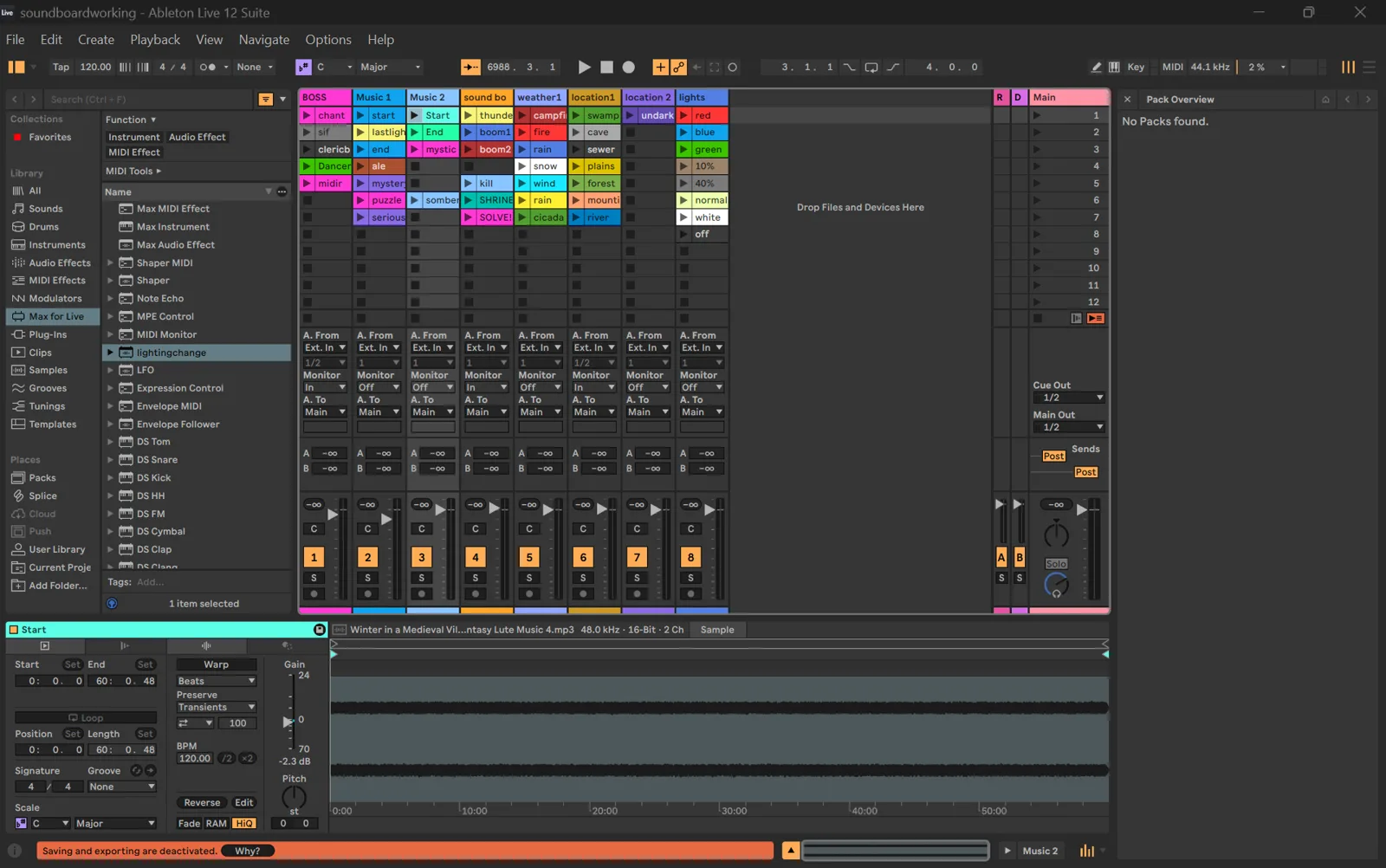
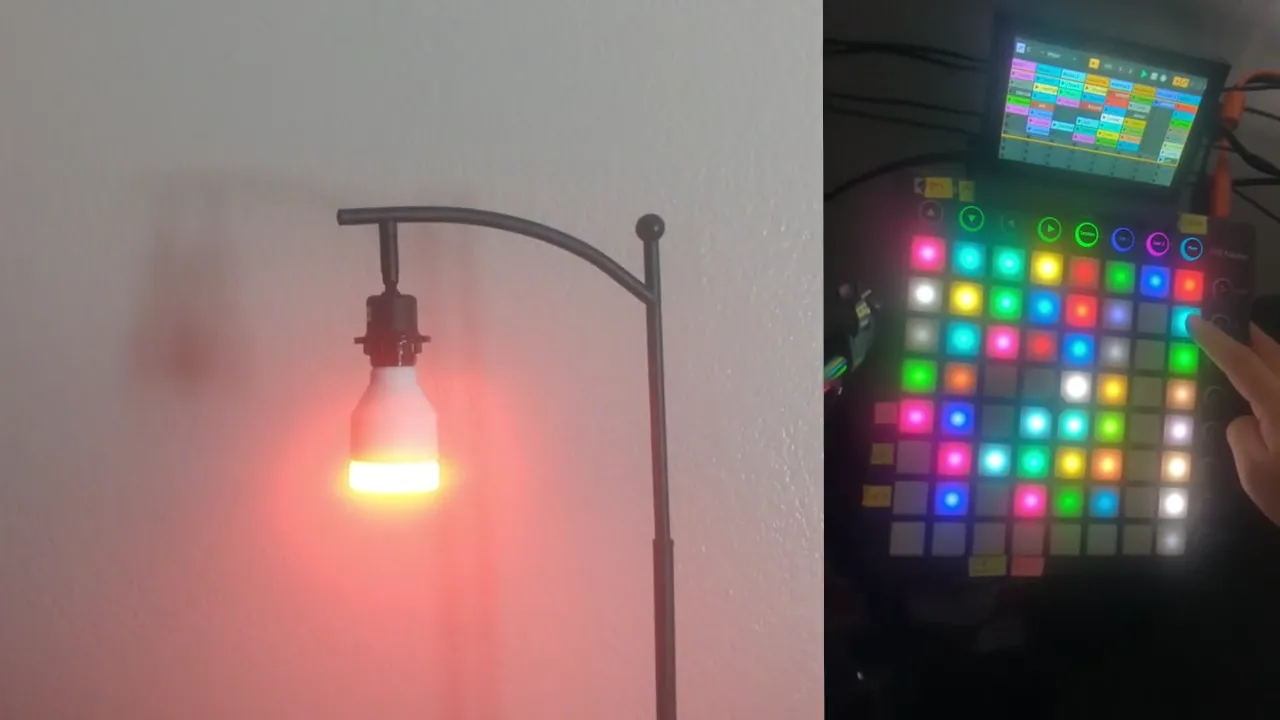
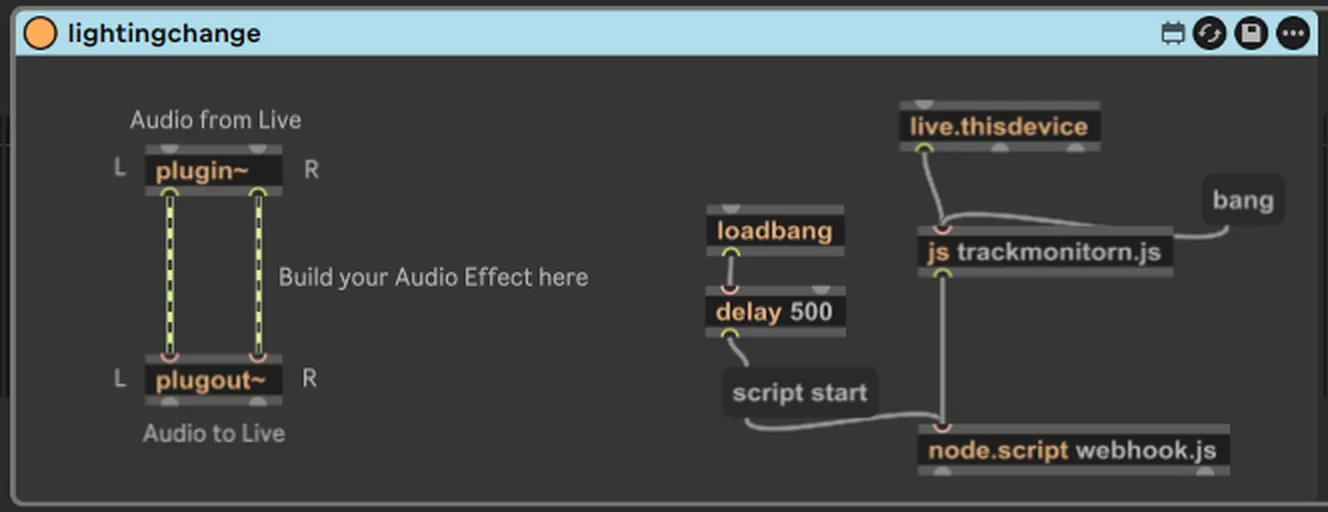
trackmonitorn.jsMax for Live · js
// Runs inside Ableton through Max for Live.
// Watches every track and reports which clip just started.

var observers = [];

// Runs once when the device loads.
function bang() {
    // Clear watchers from any earlier run, so nothing
    // gets reported twice after a reload.
    for (var i = 0; i < observers.length; i++) {
        observers[i].property = "";
    }
    observers = [];

    // Count the tracks in the open set.
    var liveSet = new LiveAPI("live_set");
    var count = liveSet.getcount("tracks");
    post("Watching " + count + " tracks\n");

    // Put a watcher on every track. Ableton calls it
    // whenever the playing clip on that track changes.
    for (var i = 0; i < count; i++) {
        var api = new LiveAPI(makeCallback(i), "live_set tracks " + i);
        api.property = "playing_slot_index";
        observers.push(api);
    }
}

// Builds the function that runs when a track changes.
function makeCallback(trackIndex) {
    return function(args) {
        // args[1] is the slot number. -1 means the track
        // stopped, so that case is ignored.
        if (args[0] === "playing_slot_index" && args[1] >= 0) {
            var slotIndex = args[1];

            // Find the clip in that slot and read its name.
            var clip = new LiveAPI("live_set tracks " + trackIndex + " clip_slots " + slotIndex + " clip");
            var name = clip.get("name");
            post("Now playing: " + name + "\n");

            // Hand the name to webhook.js.
            outlet(0, "clip", name);
        }
    };
}
webhook.jsMax for Live · node.script
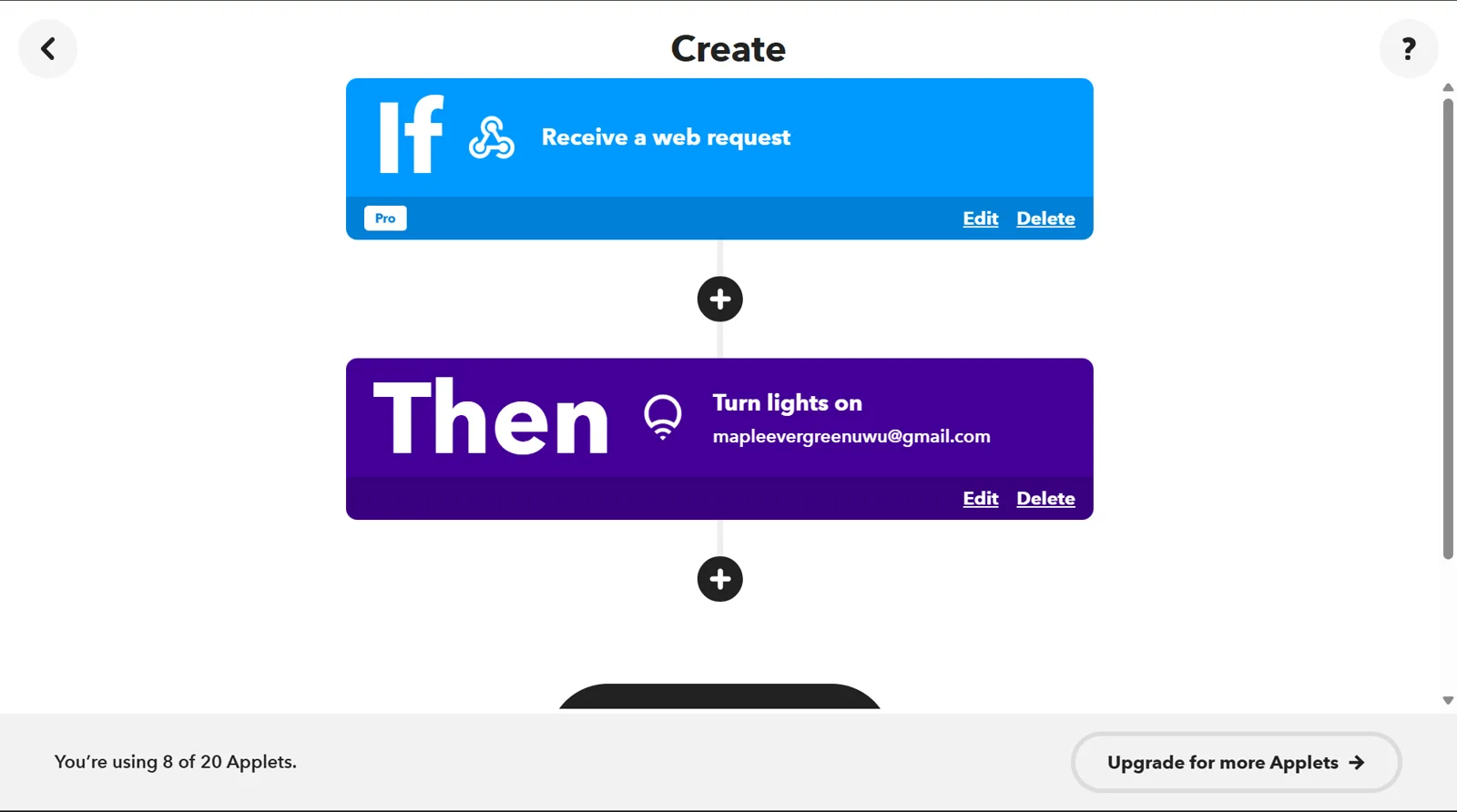
// Runs in Node inside the same device. Gets a clip name
// from trackmonitorn.js. If it's a lights clip, it sends
// a web request to IFTTT, and IFTTT sets the bulbs.

const Max = require('max-api');
const https = require('https');

// One IFTTT address per color. The key is my IFTTT account.
const KEY    = "<ifttt-maker-key>";
const red    = "https://maker.ifttt.com/trigger/RED/with/key/"    + KEY;
const blue   = "https://maker.ifttt.com/trigger/BLUE/with/key/"   + KEY;
const green  = "https://maker.ifttt.com/trigger/GREEN/with/key/"  + KEY;
const off    = "https://maker.ifttt.com/trigger/OFF/with/key/"    + KEY;
const on     = "https://maker.ifttt.com/trigger/WHITE/with/key/"  + KEY;
const normal = "https://maker.ifttt.com/trigger/NORMAL/with/key/" + KEY;
const rain   = "https://maker.ifttt.com/trigger/rain/with/key/"   + KEY;
const purple = "https://maker.ifttt.com/trigger/pink/with/key/"   + KEY;

// Which clip names mean what. Any name not in this
// list is ignored. Adding a color is one new line here
// and one new rule in IFTTT.
const clipMap = {
    "Start game": { url: normal, color: "normal" },
    "green":  { url: green,  color: "green"  },
    "red":    { url: red,    color: "red"    },
    "blue":   { url: blue,   color: "blue"   },
    "normal": { url: normal, color: "normal" },
    "off":    { url: off,    color: "off"    },
    "white":  { url: on,     color: "white"  },
    "purple": { url: purple, color: "purple" },
    "rain":   { url: rain,   color: "rain"   }
};

// Send the request. If it fails, wait and try again,
// up to four times.
function sendWebhook(entry, attempt) {
    attempt = attempt || 1;

    // agent: false opens a fresh connection every time
    // instead of reusing an old one.
    https.get(entry.url, { agent: false }, (res) => {
        res.resume(); // read the reply so the connection closes cleanly
        Max.post("Sent" + (attempt > 1 ? " (attempt " + attempt + ")" : "") + " > " + entry.color);
    }).on('error', (err) => {
        if (attempt < 4) {
            // Wait a bit longer each time: 0.5 s, 1 s, 1.5 s.
            setTimeout(() => sendWebhook(entry, attempt + 1), attempt * 500);
        } else {
            Max.post("FAILED after 4 tries: " + entry.color + " (" + err.message + ")");
        }
    });
}

// Runs every time trackmonitorn.js reports a clip.
Max.addHandler("clip", (clipName) => {
    const entry = clipMap[clipName];
    if (entry) {
        sendWebhook(entry);
    } else {
        // A music or sound clip. Nothing to send.
        Max.post("No webhook mapped for: " + clipName);
    }
});